How to Prevent Ice Dams on Your Michigan Roof
An ice dam is a symptom of heat escaping from your house, and the fix starts in the attic, not on the roof edge.
October 16, 2026 · 4 min read
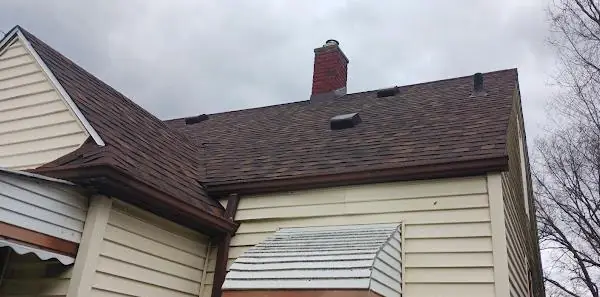
Every January somebody calls us with a brown stain spreading across a bedroom ceiling and a row of icicles hanging off the eaves like a curtain. Nine times out of ten, that's an ice dam. They're common in Michigan, they're frustrating, and the good news is that most of them are preventable if you deal with the cause before the first hard freeze. Here's how we explain it to homeowners from Livonia to Royal Oak.
What an ice dam really is
Snow lands on your roof. Heat leaking up from the living space warms the roof deck, so the snow melts from underneath. That meltwater runs down the roof until it hits the cold overhang at the eave, which sits outside the warm part of the house. There it refreezes. Over days, the ice builds into a ridge, and the next round of meltwater has nowhere to go. It backs up under the shingles and finds its way into the wall or the ceiling.
So the roof isn't the root problem. The roof is where the symptom shows up. If heat escapes into the attic, you'll chase ice dams every winter no matter how good your shingles are.
Start in the attic: insulation and ventilation
Two things control how much heat reaches the underside of your roof deck: how well the attic floor is insulated and sealed, and how well the attic is ventilated. You want the warm air of your house to stay below, and you want cold outside air to move along the underside of the roof so the deck stays near outdoor temperature.
- Look at the insulation on the attic floor. Thin, patchy or compressed insulation lets heat through.
- Check around recessed lights, bathroom fans and the attic hatch. These are classic places where warm, moist air leaks up.
- Make sure bath and kitchen fans vent outdoors, not just into the attic.
- Look for soffit vents that are blocked by insulation or paint. Air has to be able to come in low and leave high.
- Confirm there's a ridge vent or other exhaust at the top so air actually flows through.
A free roof inspection from us includes a look at how the roof is built to breathe. It's one of the cheapest ways to head off a bigger problem.
Clear the gutters before winter
Gutters full of leaves and grit hold water that freezes into a solid trough of ice. That ice sits right at the edge of the roof and makes it easier for a dam to build. Clear the gutters and downspouts in late fall, after the leaves are down but before the freeze. Make sure downspouts drain away from the foundation too. If your gutters pull away from the fascia or sag, get them fixed. We handle gutter work along with roofing, so we can look at both together.
A simple fall checklist
- Walk the yard and look at the roof from the ground with binoculars for missing, lifted or cracked shingles.
- Check the flashing at chimneys, walls and skylights.
- Look at the pipe boots, the rubber collars around vent pipes, for cracks.
- Trim branches that hang over the roof, since they drop debris and hold moisture.
- Clear the gutters and downspouts.
- Go into the attic on a cold, bright day and look for frost on the underside of the roof deck or damp insulation.
Please don't climb on an icy or wet roof to do any of this. Use the ground, a ladder at the eave on a dry day, or call us.
When an ice dam forms anyway
Sometimes the weather beats the setup. If you have a dam and water is coming in, move valuables away from the drip, put a bucket under it and stay out from under any ceiling that sags with water. Don't go up on the roof in the dark or in bad weather. If water is still coming in, call us. We can tarp the roof to stop more damage and then schedule the proper repair.
What not to do matters just as much. Never chip, chop or pick at the ice with a hammer, shovel, hatchet or ice pick. It's easy to gouge shingles, crack the flashing or fall, and the ice usually comes back anyway. Don't pour salt on shingles either. Safer options exist, like removing snow from the lower part of the roof with a roof rake from the ground, taking care not to scrape the shingles.
When to call a roofer
Call if you see stains on the ceiling or walls, drips during a thaw, shingles lifting at the eave, or the same ice dam in the same spot year after year. Repeat dams almost always point to an attic problem that's worth fixing at the source, and sometimes to an eave that needs better underlayment when the roof is replaced.
T&M Roofing is at (313) 600-4538, six days a week, Monday through Saturday. Free written estimates, and we'll meet your adjuster on site if a storm or a dam leads to a claim.
T&M Roofing, (313) 600-4538
Call (313) 600-4538More articles
What Drives the Cost of a Roof Replacement in Michigan
Two roofs on the same street can come back with very different estimates, and the reasons are usually sitting right there on the roof.
Roof Insurance Claims in Michigan: What to Do After a Storm
What you do in the first day after storm damage, and what the adjuster visit looks like.