Homes and commercial
Metal roofing
Metal roofs for homes and commercial buildings that shed Michigan snow, installed with the trim and fastening details that keep them dry.
Chapter 01
Why metal makes sense on a Michigan roof
Snow does not sit long on a metal roof. The smooth, hard surface lets it slide, which keeps weight off the structure and takes some pressure off the eave where ice dams form. Metal is also lighter than many roofing systems, so it can go onto buildings that would struggle to carry more. It appeals to Detroit-area homeowners and building owners who want a roof that sheds winter quickly and looks different from the neighbours' shingles.
The trade-off is that snow can let go all at once, so what sits below a metal roof, a door, a walkway, a driveway, needs thought before the panels go on. T&M Roofing talks that through at the free inspection and writes the answer into the estimate, whether the roof is on a house in Dearborn or a commercial building in Livonia.
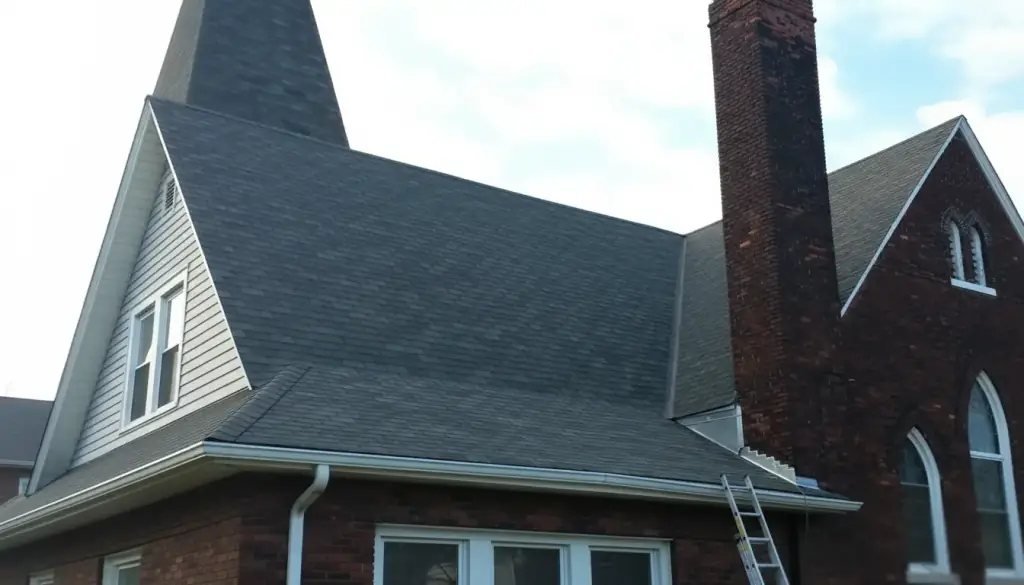
Finished roof edge with a clean gutter line, the eave detail where roof trim meets the gutter
Where a metal roof leaks: underlayment, fasteners and trim
Metal panels shed water well on their own, so leaks come from the details. The underlayment beneath the panels is the second line of defense, and in a cold climate an ice and water membrane at the eaves and valleys earns its place. Fastener and panel choice matters too: exposed screws sit on gasketed heads that age, while concealed-clip systems hide the fasteners and let the panels move.
Metal expands and contracts with every temperature swing, and Michigan swings a lot. Panels need room to move. Trim at eaves, valleys, ridges and penetrations has to be cut and lapped so water is led away from every joint, and flashing around chimneys and vents has to allow the same movement. A roof that ignores expansion works loose over time.
Chapter 03
Residential and commercial metal, and what the paperwork says
On a house, metal roofing is either a replacement or a new roof over new framing, a garage or an addition. On a commercial or industrial building it covers pitched roofs and the sloped sections of larger structures, and the details change with the size of the panels and the span they cross. T&M Roofing does both, homes and commercial buildings, with metal named on its own list next to asphalt, TPO, EPDM and Duro-Last.
Every metal roof starts with a free written estimate from Ted Thompson's office at 14564 Schaefer Hwy in Detroit. The estimate names the panel system, the underlayment, the trim and the labor. Our work carries a 10-year labor warranty, and we will beat any written estimate from a licensed and insured roofer. Michigan licence #262400794. Call (313) 600-4538, Monday to Saturday, 8 to 6.
Google 4.4 from 47 reviews. Tana Jenkins: "the owner's trustworthy demeanor and his reasonable prices."
Metal beside TPO and EPDM
Four line items, read down the page. Flat roofs are covered on the TPO and EPDM pages, and a metal roof on a house can start with a new roof installation.
Comparison sheet
- Surface and lookMetal is coated panels with straight ribs or flat seams. TPO is a white membrane and EPDM a black one, and both are seen from above only on a flat roof.
- Seams and jointsMetal joins at lapped or interlocking panel edges and at trim. TPO is welded and EPDM is taped, so their joins sit in the membrane itself.
- Snow and freeze-thawMetal lets snow slide, sometimes all at once. TPO and EPDM hold it on a flat roof until it melts, and the drains carry the water off.
- Where it fitsMetal fits pitched roofs on houses, garages and commercial buildings with slope. TPO and EPDM are the choice for flat and low-slope roofs.