Commercial
EPDM roofing
Black EPDM rubber membrane for low-slope roofs, installed new or repaired at seams, flashing, shrinkage and punctures.
Chapter 01
EPDM: black rubber with a long record on flat roofs
EPDM is a synthetic rubber membrane, black, sold in large rolls so that a flat roof can often be covered with few seams. It has been used on low-slope roofs for a long time and it handles Michigan cold well, staying flexible when the temperature drops well below freezing. The dark surface takes on heat, so snow and ice tend to leave an EPDM roof sooner than they leave a white one.
T&M Roofing installs EPDM on commercial and industrial roofs in Detroit, Dearborn and Livonia, and repairs it on buildings where it is already down. Whether a roof should be patched, re-covered or taken off comes out of the free inspection, and the answer goes on the written estimate along with our Michigan licence number, #262400794, so you can check it.
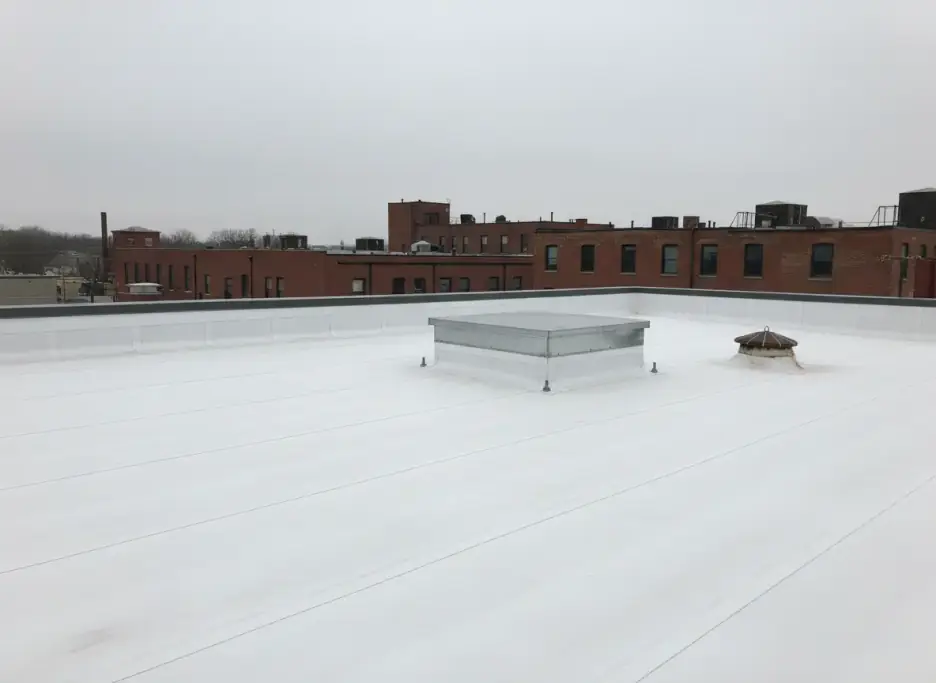
Flat low-slope roof membrane against a brick city building
Seam tape, primer and flashing: where an EPDM roof leaks
The field of an EPDM roof, the big open middle, rarely causes trouble. The trouble is at the edges. Seams are joined with primer and seam tape or adhesive, and that bond has to go onto a clean, dry surface or it lets go later. Flashing around curbs, pipes and walls is built from smaller pieces of rubber and sealant, and each one is a place for a gap if it was rushed.
Repairs follow the same logic. A puncture gets a cleaned and primed patch that overlaps the damage on every side. A seam that has lifted is cleaned back, re-primed and re-taped rather than smeared over with sealant. Shrinkage, where the membrane pulls tight at a wall or curb, is fixed by relieving the tension and re-flashing the detail. Cutting corners here is how the same leak comes back in March.
Chapter 03
EPDM, TPO or Duro-Last: choosing for the building
There is no single best membrane. EPDM suits many flat roofs where simple details and cold-weather flexibility matter. TPO suits roofs where a white, reflective surface and welded seams are worth having. Duro-Last arrives prefabricated to the roof's measurements, which cuts the number of seams made on site. Metal belongs on roofs with enough pitch. The building, its rooftop equipment and how often people walk it decide.
Ask for the comparison in writing. T&M Roofing will price the systems that fit your roof side by side, for free, and we will beat any written estimate from a licensed and insured roofer. Michigan Saves financing is available, and seniors, veterans and first responders get a discount. Our 10-year labor warranty covers our work whichever system goes on.
Ashonda Lloyd, Google: "he came on a Saturday and asked us to take our time in making a decision."
Three systems, one quote sheet
EPDM is marked. If the building is a better fit for TPO or metal, the inspection says so and the estimate follows that system.
EPDM
This page- Surface
- Black synthetic rubber that takes on heat.
- Seams
- Primer and tape or adhesive. Large sheets mean fewer of them.
- Snow and freeze-thaw
- Stays flexible in the cold. Snow tends to leave sooner.
- Typical building
- Flat roofs, additions and low-slope commercial buildings.
TPO
- Surface
- White, reflective, smooth.
- Seams
- Welded with hot air into one sheet.
- Snow and freeze-thaw
- Meltwater runs to the drains. Check the welds after winter.
- Typical building
- Flat and low-slope commercial and industrial roofs.
Metal
- Surface
- Coated steel or aluminum panels.
- Seams
- Lapped or interlocking panels, sealed at trim and fasteners.
- Snow and freeze-thaw
- Sheds snow fast. Watch what sits below the eave.
- Typical building
- Pitched homes and commercial buildings with slope.