TPO, EPDM, Duro-Last or Metal: Choosing a Commercial Roof
A plain-spoken guide for owners and property managers weighing membrane systems for flat and low-slope buildings.
October 16, 2026 · 3 min read
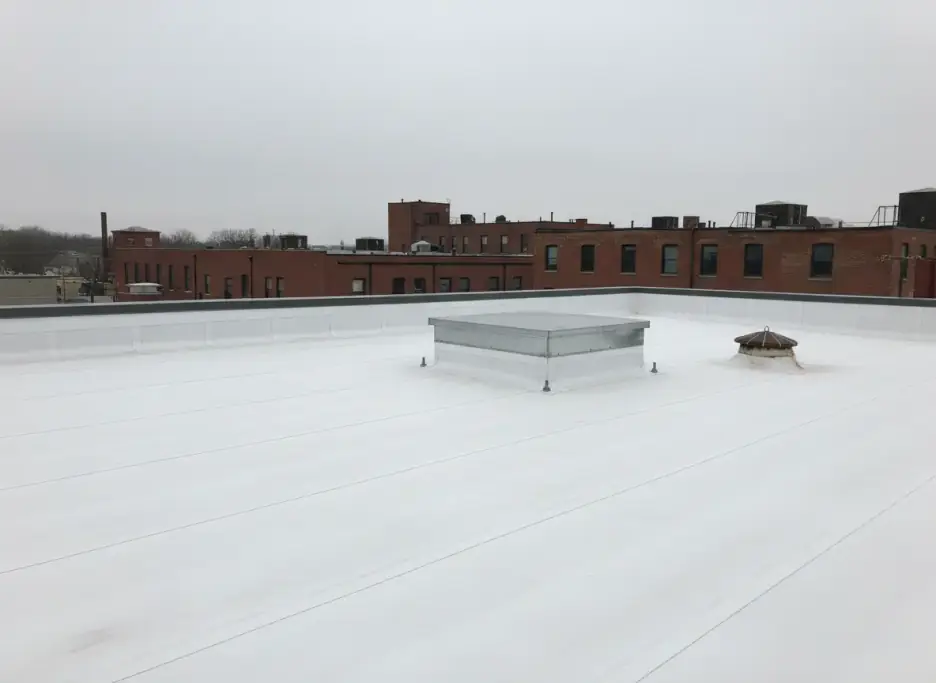
Flat and low-slope roofs behave nothing like a pitched shingle roof. Water doesn't run off fast, so it sits, finds seams, and tests every joint. If you manage a warehouse in Warren, a retail strip in Southfield or an industrial building near Detroit, picking the right membrane and keeping up with it saves real headaches. We install TPO, EPDM, Duro-Last and metal systems, and here's how we explain the choices.
TPO: the white membrane
TPO is a single-ply membrane, usually white, that gets heat-welded at the seams. The welded seam is its biggest advantage. When it's done right, the seam becomes part of the roof rather than a glue line. The white surface reflects sunlight, which can help keep the building cooler in summer. TPO is popular on commercial flat roofs for those reasons. Like any system, it depends on clean installation, good flashing at walls and penetrations, and a roof that's inspected over time.
EPDM: the black rubber workhorse
EPDM is a synthetic rubber membrane that comes in large sheets, which means fewer seams across a big roof. It's been used for a long time, it's flexible in cold weather, and repairs are well understood. The seams and flashing details are glued or taped, so those spots deserve attention over the years. Black EPDM absorbs more heat than white membranes, which is worth thinking about if cooling costs matter in your building.
Duro-Last: the prefabricated option
Duro-Last is a prefabricated PVC system. The panels are made to measure off-site from the dimensions of your roof, then brought over and installed, with the seams welded. Pre-fabrication means more of the work is done under controlled conditions rather than on the roof in the weather. It also tends to handle chemicals and grease better than some other membranes, which matters on restaurants and certain industrial buildings. It's a branded system installed by contractors trained on it, and we install it.
Metal for low-slope buildings
Metal roofing suits many commercial and industrial buildings that have enough slope for it. It sheds snow and water quickly, it lasts, and it can be a good fit where you want a long-term roof. The tradeoffs are the material and the skill involved: panels, fasteners, trim and sealants all have to be right, and the details at penetrations and walls decide whether it stays tight. A metal roof can also go over an existing roof in some cases, which brings up the next question.
Re-cover or tear-off
A re-cover means installing a new membrane over the existing roof. A tear-off means stripping the old roof down to the deck first. Neither is always better. A re-cover can save time and disposal, but it only makes sense if the existing roof and deck are dry and sound. If the insulation underneath is wet, a new membrane on top just traps the moisture.
- Choose a re-cover when the existing roof is dry, flat and well attached, and the building can handle the added layer.
- Choose a tear-off when there's wet insulation, soft decking, multiple old layers or widespread failures.
- Either way, get the plan in writing, including what happens if wet material is found.
We start with an inspection and a written estimate, and we'll tell you which direction fits what we find.
Maintenance programs for property managers
Most commercial roof trouble starts small. A clogged drain, a lifted seam, a cracked boot around a rooftop unit, flashing that's moved after a freeze. Left alone, those turn into interior leaks, ruined ceiling tiles and unhappy tenants. A scheduled maintenance program catches them early.
- Regular inspections on a schedule that makes sense for the building, with notes and photos.
- Drains, scuppers and gutters cleared of debris.
- Seams, flashing and penetrations checked and resealed as needed.
- A written record of the roof's condition, so you know what's coming before it becomes an emergency.
The written record helps when you're planning a budget, selling a property, or talking to an insurer. It's the kind of paperwork that makes decisions easier.
Picking the right system
There's no single winner. The right answer depends on the building: how the roof drains, what's under the membrane, what the equipment on the roof looks like, what's cooking or venting nearby, and how long you plan to hold the property. We'll walk the roof with you and explain our reasoning in plain language.
T&M Roofing handles commercial and industrial roofs across Detroit and the surrounding area. Call (313) 600-4538 for a free written estimate. We're fully licensed and insured, and we will beat any written estimate from a licensed and insured roofer.
T&M Roofing, (313) 600-4538
Call (313) 600-4538More articles
What Drives the Cost of a Roof Replacement in Michigan
Two roofs on the same street can come back with very different estimates, and the reasons are usually sitting right there on the roof.
How to Prevent Ice Dams on Your Michigan Roof
An ice dam is a symptom of heat escaping from your house, and the fix starts in the attic, not on the roof edge.